Your logo appears on every uniform, every day, so the way it is applied matters. It affects how the uniform looks, how long the branding lasts and whether it suits the fabric underneath.
This guide compares embroidery and printing for procurement, HR and operations teams ordering uniforms in the UAE, and explains which method suits which garment.
Key takeaways
- Embroidery generally lasts longer through repeated washing and looks more formal.
- Printing suits large logos, fine detail and lightweight or stretch fabrics.
- Many uniform programmes use both: embroidery on the chest, printing on the back.
Embroidery or printing for uniform logos: which lasts longer?
Embroidery usually lasts longer. The design is stitched into the fabric with thread, so there is no surface layer to crack or peel, and it generally holds up well to frequent washing. A good-quality print can also last well, but how long it lasts depends more on the print method, the fabric and how the garment is washed.
Durability is only one part of the decision, though. Here is how the two compare:
| Embroidery | Printing | |
|---|---|---|
| Look | Raised, textured, formal | Flat and smooth |
| Durability | Generally strong through frequent washing | Depends on the method, fabric and laundry |
| Fine detail | Small text and thin lines are harder to reproduce | Handles fine detail and gradients better |
| Large designs | Can feel stiff and heavy | Suits large areas such as the back of a garment |
| Best fabrics | Stable, medium to heavy fabrics | Wide range, including lightweight fabrics, depending on the method |
| Comfort | Can be felt on the inside of the garment | Light, though a large print can feel less breathable |
| Typical uses | Chest logos, staff names, crests, badges | Back logos, company names on hi-vis, promotional garments |
When embroidery is the better choice
Embroidery works best when a uniform needs to look smart for a long time.
- Client-facing uniforms. Stitched logos look at home on blazers, office shirts and front-of-house wear.
- Frequently washed garments. Scrubs, lab coats and chef jackets are washed often, so embroidery is a common choice for them. Our hospital uniform buying guide covers this in more detail.
- Names and titles. Staff names on lab coats, reception uniforms and chef jackets are usually embroidered.
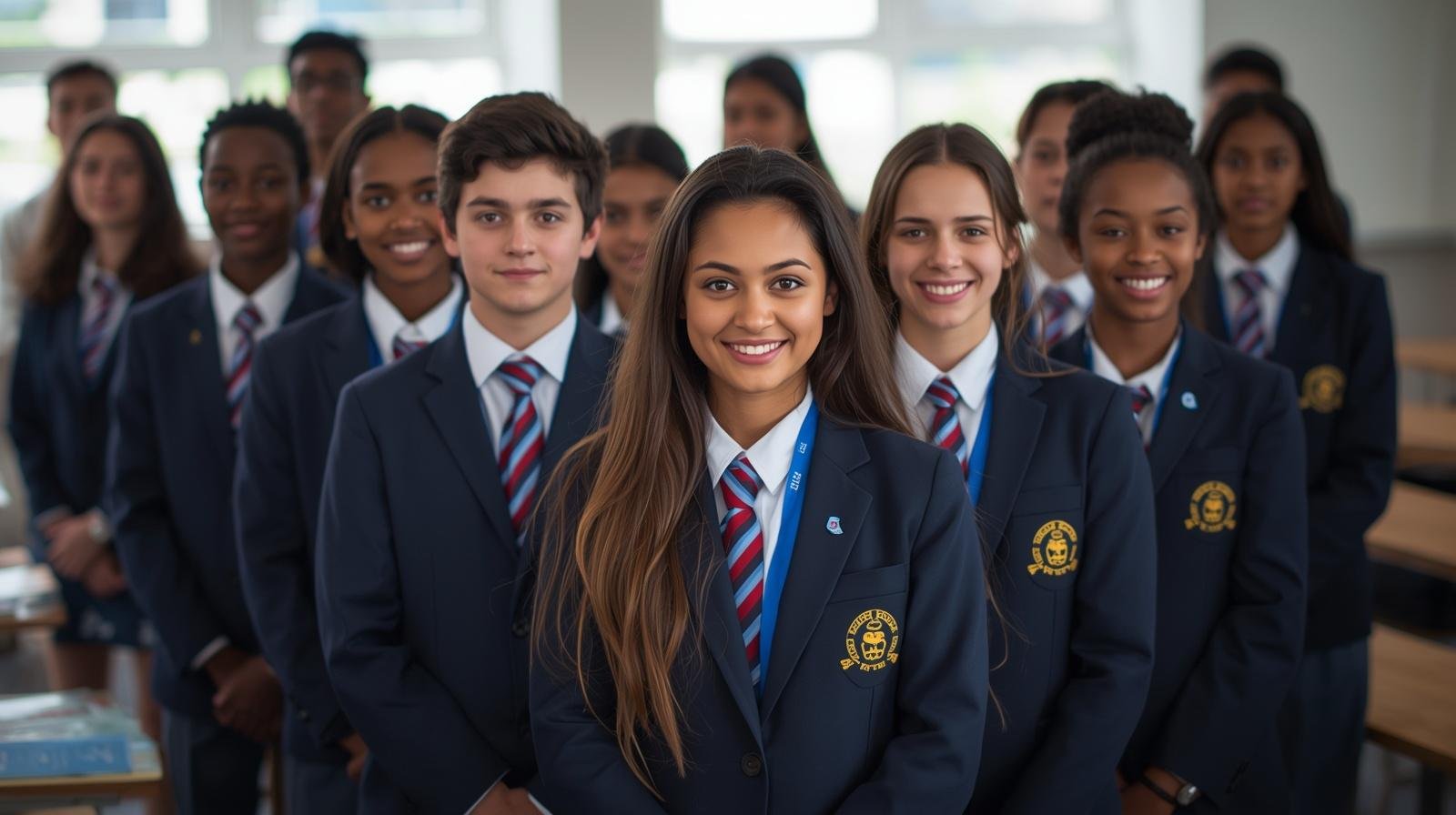
- Crests and badges. School crests and fire service badges carry a sense of identity that suits a stitched finish.
Embroidery has limits. Very small text can fill in, thin lines may need thickening, and a large stitched area can feel stiff. Ask for a digitised sample of your logo on the actual fabric, because a design that looks sharp on screen can change once it is stitched.
When printing is the better choice
Printing works best for larger designs, detailed artwork and garments where embroidery would be too heavy.
- Large back logos. A company name across the back of a jacket or polo is easy to read from a distance and stays light to wear.
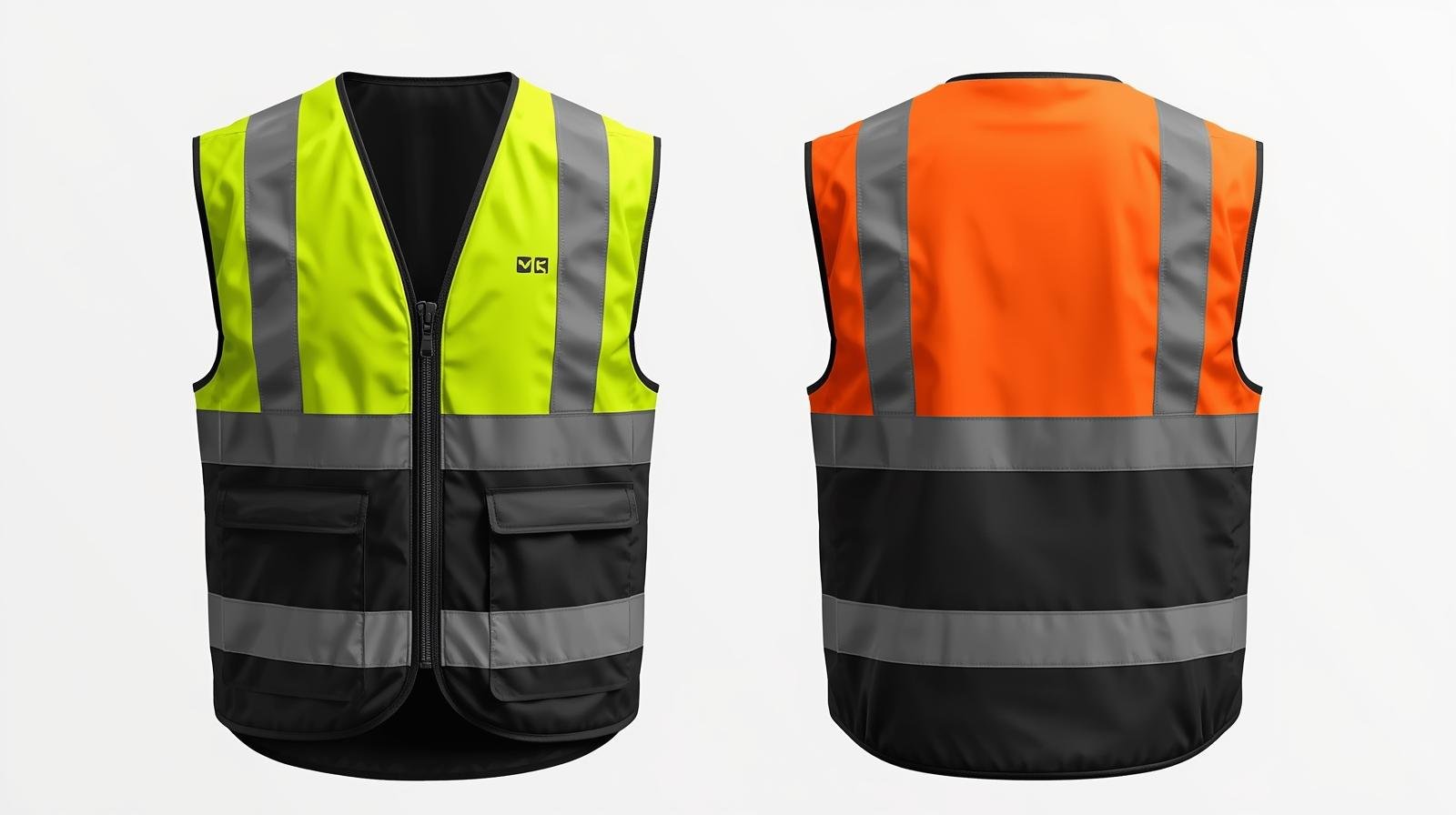
- Hi-vis vests. These are lightweight garments, so a printed company name is often more practical than stitching.
- Complex artwork. Gradients, photographs and very fine lines are better printed.
- Lightweight or stretch fabrics. Dense stitching can pucker thin fabric, while the right print sits flat.
“Printing” covers several different processes, and it is worth asking which one a supplier plans to use:
| Method (general) | How it works | Worth knowing |
|---|---|---|
| Screen printing | Ink is pushed through a stencil, one colour at a time | Often used for simple designs in larger quantities |
| Heat transfer | A printed design is pressed on with heat | Useful for names and small runs; check how it holds up in your laundry |
| DTF (direct-to-film) | A design printed on film is bonded on with heat | Handles full colour; follow the care instructions for wash temperature |
| Sublimation | Dye bonds into polyester fabric | Doesn’t sit on the surface, but needs polyester and suits light base colours |
Which method suits which uniform?
These are common starting points. The right answer still depends on your fabric, logo and laundry process.
| Uniform type | Usual choice | Why |
|---|---|---|
| Hospital scrubs and lab coats | Embroidery | Frequent washing; names and titles |
| Hotel and restaurant uniforms | Embroidery | Polished look; logos on chef jackets |
| Corporate blazers and shirts | Discreet embroidery | Formal finish |
| School uniforms | Embroidered crest | Part of the school’s identity |
| Construction workwear | Embroidery on the chest, printing on the back | Durable logo, name readable at a distance |
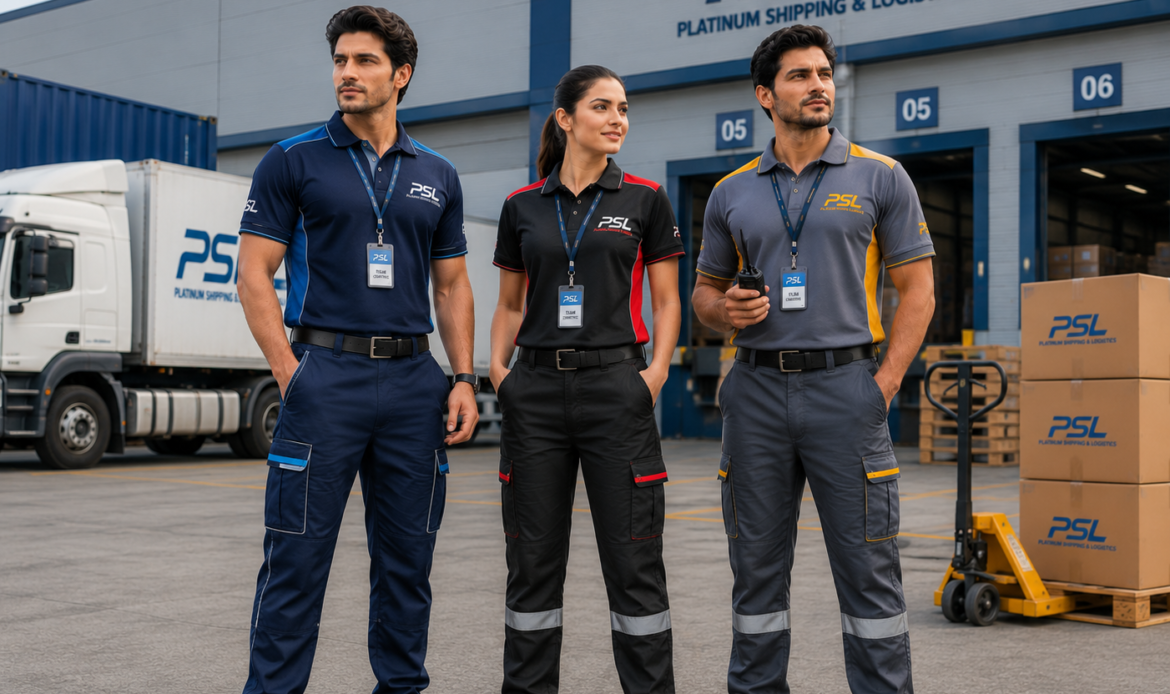
| Warehouse and delivery uniforms | Either, or both | Chest logo plus a large back logo |
| Hi-vis vests | Printing | Lightweight fabric |
For site teams, see the branding section of our guide to construction uniforms for Dubai’s heat.
Three things that change the answer
Your fabric. Open-weave, very thin or stretchy fabric can pucker under dense stitching. Coated fabrics may not suit every print method. Test on the fabric you are actually ordering.
Your laundry. Tell your supplier how uniforms will be washed: at home, in-house or by an external laundry, and at what temperature. Hot, heavy-duty washing is harder on prints than normal domestic washing.
Safety garments. Branding must not undermine what a protective garment is designed to do. On hi-vis, keep logos clear of reflective tape. On fire-resistant clothing, ask your supplier to confirm in writing that the thread or print will not compromise the garment’s protection or any standard it needs to meet.
Getting logo placement right
Keep placement the same on every garment so your whole team looks consistent.
- Left chest is the standard position for logos on shirts, polos and jackets.
- Sleeve works well as a secondary position for a company name or department.
- Back suits large logos that need to be read from a distance.
- Staff names usually sit on the chest, opposite or below the logo.
Agree the logo size in centimetres for each garment and record it, so re-orders match the first batch.
Quick checklist before you order
- ☐ Logo sent as a vector file (AI, EPS or PDF) if you have one
- ☐ Brand colours specified (Pantone references if available)
- ☐ Method chosen for each garment and position
- ☐ Sample approved on the actual fabric and colour
- ☐ Logo size and position recorded for each garment
- ☐ Laundry process shared with your supplier
- ☐ Written confirmation for fire-resistant or other protective garments
- ☐ Artwork and specifications kept on file for re-orders
Embroidery vs printing FAQs
Is embroidery more expensive than printing?
It depends on the design and quantity. Embroidery cost is driven mainly by the size and stitch count of the logo, while printing cost depends on the method, number of colours and print area. Ask for both options to be quoted for your actual logo.
Can we use both on the same uniform?
Yes, and it is common. Many companies embroider the chest logo for a smart look and print a larger logo on the back for visibility.
Can a logo with fine detail be embroidered?
Sometimes, but very small text and thin lines may need simplifying. Ask to see a stitched sample before you approve the order.
Which is better for staff names?
Embroidery is the usual choice for names on lab coats, reception uniforms and chef jackets, because it looks neat and holds up to regular washing.
Need your logo on uniforms?
ZLK Garments is a uniform supplier in Dubai offering logo embroidery, printing and staff name embroidery on uniforms for hospitals, hotels, restaurants, offices, schools, construction and logistics teams. Founded in 2013, we have an office in Deira and our own production workshop in Ajman. Send us your logo, garments and quantities on WhatsApp, or see our custom uniforms for every industry.