


A hospital dresses more roles than almost any other employer: consultants, nurses, theatre teams, lab staff, pharmacists, receptionists, porters and housekeeping. Each group needs a uniform that suits the work, survives frequent washing and tells patients at a glance who is who.
This guide walks procurement, HR and nursing managers through the decisions that matter when ordering hospital uniforms in the UAE, from mapping departments to planning re-orders.
Key takeaways
- Map every department and role first, then choose garments and colours for each.
- Pick fabrics for long shifts and your laundry process, and ask for written proof of any special finish.
- Agree sizing, embroidery and re-order rules before the first order so every batch matches.
Start with a department map
The most common mistake is ordering “scrubs” for everyone. Start by listing each department, the roles in it and what they actually do during a shift.
| Department | Typical garments | What to think about |
|---|---|---|
| Doctors and consultants | Lab coats, scrubs | Name and title embroidery, pocket layout |
| Nursing | Scrub sets, nurse uniforms | Colour by unit or grade, comfort for long shifts |
| Operating theatre | OT scrubs and theatre wear | Separate colour so theatre wear is easy to spot |
| Laboratory and pharmacy | Lab coats | Length, closures and pockets for the work done |
| Reception and admin | Front-office style uniforms | Match the hospital’s brand look for patients |
| Housekeeping and support | Practical tunics and trousers | Durability, easy movement |
| Patients | Patient gowns | Sizes, easy fastening |
Once the map is done, count headcount per role across all shifts, including part-time staff and expected new joiners.
Colour coding by department and role
Colour coding helps patients and visitors know who to ask, and helps staff spot the right team quickly in a busy ward. Many hospitals give each department or grade its own scrub colour and keep lab coats white for doctors.
A few practical rules:
- Write it down. Keep a simple colour chart (department, role, colour, garment) and share it with HR and every department head.
- Keep it simple. Too many colours become hard to remember; group similar roles together.
- Check contrast with your interiors. Colours should look clean against your walls, beds and signage.
- Plan for growth. Leave room in the chart for new departments so you don’t have to change existing colours later.

Fabrics for long shifts and frequent washing
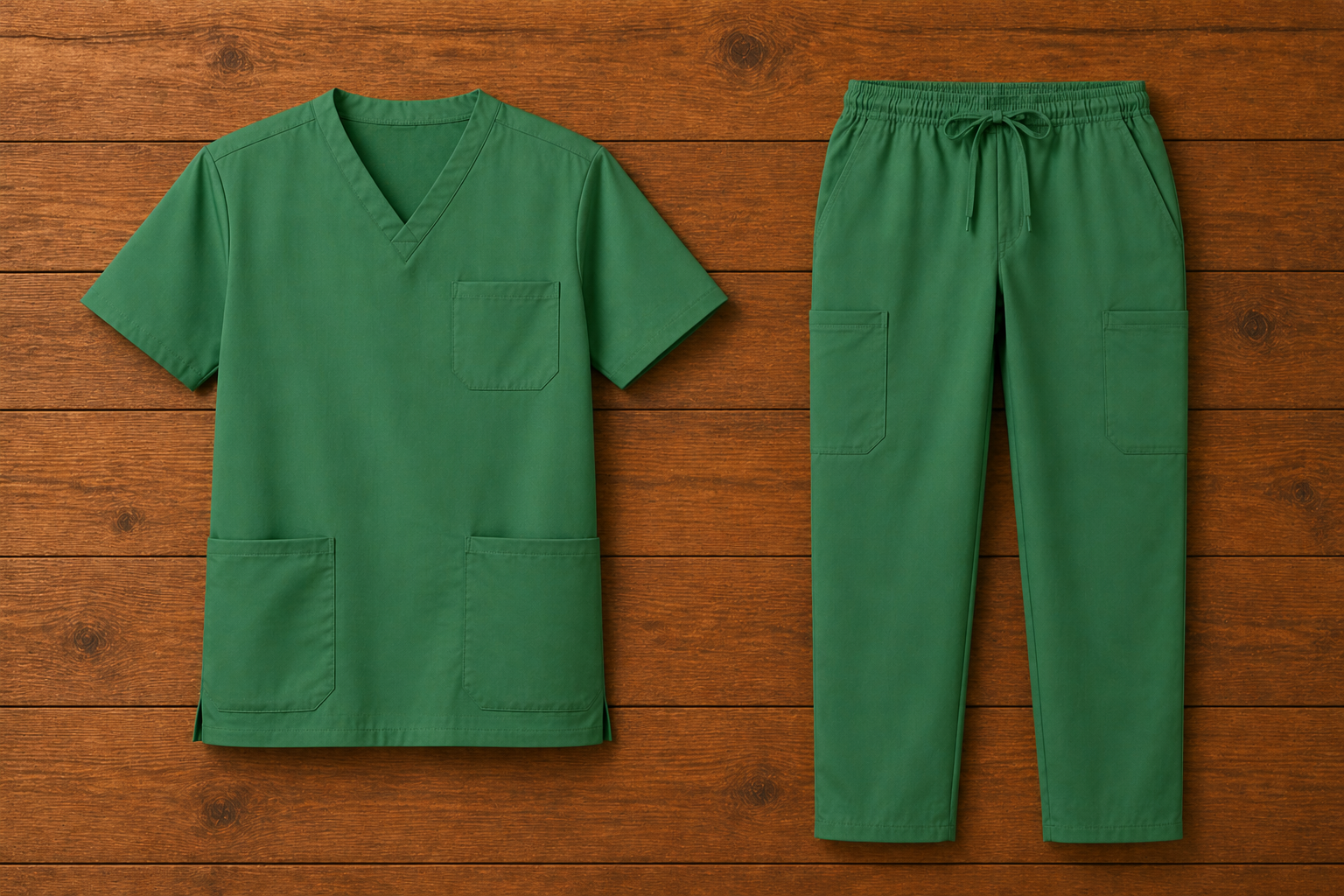
Hospital uniforms are washed far more often than most workwear, often at high temperatures. When comparing fabrics, ask about:
- Comfort: breathable fabric for staff who are on their feet for twelve-hour shifts, and some stretch for bending and lifting.
- Colour that lasts: colourfast fabric keeps department colours recognisable wash after wash, which matters when colour is how people identify roles.
- Your laundry process: tell your supplier how and at what temperature uniforms will be washed (in-house laundry, external laundry or staff at home), so the fabric suits it.
- Special finishes: if a department needs a fluid-resistant or antimicrobial finish, ask the supplier for the written specification or test report for that fabric before you order.
Fit and sizing for the whole team
A uniform that fits badly is uncomfortable on a long shift and looks untidy to patients.
- Offer a full size range, with separate cuts for men and women where staff prefer them.
- Use a sample size set: let staff try sizes before the order is finalised, then collect sizes by department.
- Keep spare stock of the most common sizes for new joiners and replacements.
- Record sizes centrally so re-orders don’t need a new sizing exercise every time.
Logos, names and titles
Embroidery is the usual choice for hospital logos, staff names and titles because it lasts through frequent washing. Decide:
- where the hospital logo sits (for example, left chest) and keep it the same on every garment;
- whether names and titles go on lab coats, scrubs or both;
- how names are written (first name only, full name, title) so every badge looks consistent.
Lab coats: length and details
Lab coats vary more than most buyers expect. Agree on:
- length (hip, mid-thigh or knee) by role;
- closures (buttons or press studs) and cuff style;
- pockets for pens, phones and small instruments;
- fabric weight, so coats stay presentable through repeated washing.
Planning the order and re-orders
The steps are the same whether you are opening a clinic or refreshing a hospital’s uniforms:
| Stage | What happens |
|---|---|
| 1. Brief | Share the department map, colour chart, headcount and logo files |
| 2. Samples | Review samples and colours department by department |
| 3. Sizing | Collect sizes for every team member, plus spares |
| 4. Production | Uniforms are made with logos and names |
| 5. Delivery | Uniforms are delivered by department, ready to hand out |
Plan enough sets per person for one to wear, one in the laundry and one spare; departments with heavier washing may need more. Ask your supplier to confirm a realistic schedule with the quote, based on your quantities.
For re-orders, keep the same fabric, colours and embroidery files on record so new batches match the old ones. Mixed shades side by side on a ward are noticeable.
Quick checklist before you order
- ☐ Department and role map completed
- ☐ Colour chart agreed and shared
- ☐ Headcount per role, including shifts and new joiners
- ☐ Fabric chosen for comfort and your laundry process
- ☐ Written specification for any special finish
- ☐ Size range and sample sizing done
- ☐ Logo, name and title embroidery agreed
- ☐ Lab coat length and details agreed
- ☐ Sets per person decided
- ☐ Re-order plan for new joiners and replacements
Hospital uniform FAQs
How many scrub sets does each staff member need?
Plan for one set to wear, one in the laundry and one spare as a minimum. Departments where uniforms are changed more than once a shift may need more.
Should every department have its own scrub colour?
Many hospitals use colour coding so patients and staff can recognise roles quickly. Keep the number of colours manageable and record them in a colour chart.
Is embroidery or printing better for hospital uniforms?
Embroidery is the usual choice for logos, names and titles on scrubs and lab coats because it holds up well to frequent washing.
What should we ask a supplier before ordering?
Ask for samples in your colours, the fabric details for your laundry process, written proof of any special finish, how sizing is handled, and how they keep re-orders consistent.
Planning uniforms for a hospital or clinic?
ZLK Garments supplies healthcare uniforms in Dubai: scrubs, lab coats, nurse uniforms, OT wear and patient gowns for hospitals, clinics, medical centres, dental practices and laboratories, colour-coded by department and embroidered with your logo and staff names. Founded in 2013, we have an office in Deira and our own production workshop in Ajman. Send us your departments and headcount on WhatsApp or see our healthcare and hospital uniforms.